In a mobile-first world, choosing the right app development approach is a crucial decision for businesses. Whether you’re a startup launching your first product or an enterprise expanding your digital presence, the type of app you build directly impacts performance, user experience, scalability, and long-term costs. Among the most common choices are native app development and hybrid app development.
Both approaches have their own strengths and limitations, and the right choice depends on your business goals, budget, timeline, and technical requirements. In this blog, we’ll explore native vs hybrid app development in detail, outlining their pros and cons to help you make an informed decision.
Understanding Native App Development
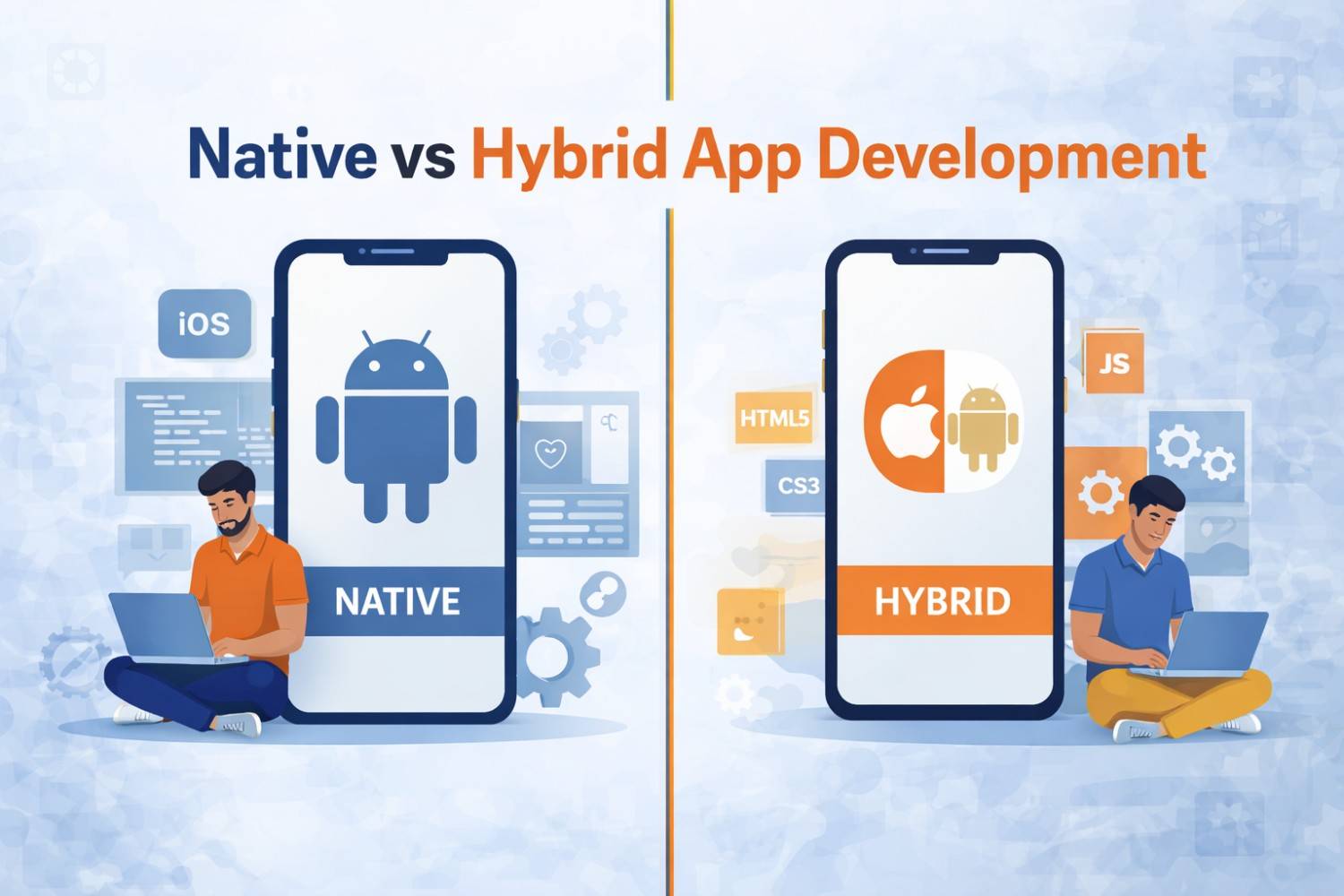
Native app development involves building applications specifically for a single platform, such as iOS or Android. These apps are developed using platform-specific programming languages—Swift or Objective-C for iOS, and Java or Kotlin for Android.
Because native apps are designed exclusively for one operating system, they can fully utilize the device’s hardware and software capabilities.
Understanding Hybrid App Development
Hybrid app development combines elements of both native and web applications. Hybrid apps are built using web technologies like HTML, CSS, and JavaScript and are wrapped in a native container, allowing them to run on multiple platforms from a single codebase.
Hybrid apps are typically developed using frameworks such as Ionic, Cordova, or similar solutions, making them an attractive option for businesses seeking faster and more cost-effective development.
Native vs Hybrid App Development: A High-Level Comparison
Before diving into pros and cons, it’s helpful to understand the fundamental difference:
Native apps are platform-specific and performance-focused
Hybrid apps are cross-platform and cost-efficient
Each approach serves different business needs and use cases.
Pros of Native App Development
1. Superior Performance
Native apps offer the highest level of performance because they are built specifically for a platform. This makes native apps ideal for performance-intensive applications. They interact directly with the operating system without relying on intermediary layers, resulting in:
Faster load times
Smoother animations
Better responsiveness
2. Enhanced User Experience
Native apps follow platform-specific design guidelines, ensuring a familiar and intuitive user experience. A polished user experience often leads to higher engagement and retention rates. Users benefit from:
Platform-consistent UI elements
Seamless navigation
Optimized touch and gesture interactions
3. Full Access to Device Features
This makes native development suitable for apps requiring advanced device-level functionality. Native apps have unrestricted access to device hardware and system features, such as:
Camera and microphone
GPS and sensors
Push notifications and background services
4. Strong Security
Native apps offer better security because they use platform-specific security protocols and APIs. This is especially important for applications handling:
Sensitive user data
Financial transactions
Healthcare or enterprise information
Cons of Native App Development
1. Higher Development Costs
Since native apps require separate codebases for iOS and Android, development costs are significantly higher. This can be challenging for startups or small businesses with limited resources. Businesses need:
Separate development teams
More development hours
Higher maintenance budgets
2. Longer Development Time
Developing two separate apps increases time-to-market. Updates and feature additions must be implemented independently for each platform, slowing down iteration cycles.
3. Complex Maintenance
Maintaining multiple codebases increases complexity. Bug fixes, upgrades, and updates require duplicated effort, leading to higher long-term maintenance costs.
Pros of Hybrid App Development
1. Cost-Effective Development
One of the biggest advantages of hybrid app development is cost efficiency. This makes hybrid apps appealing for budget-conscious businesses. A single codebase works across platforms, reducing:
Development expenses
Team size requirements
Maintenance efforts
2. Faster Time-to-Market
Hybrid apps can be developed and deployed much faster than native apps. Faster development cycles allow businesses to:
Launch products quickly
Test ideas in the market
Respond faster to user feedback
Speed is especially valuable in competitive markets.
3. Single Codebase for Multiple Platforms
With a shared codebase, updates and bug fixes can be applied once and reflected across all platforms. This simplifies development and ensures consistency.
4. Easier Maintenance and Updates
Hybrid apps are easier to maintain because developers manage a single codebase. This reduces:
Technical complexity
Ongoing operational costs
Time spent on updates
Cons of Hybrid App Development
1. Performance Limitations
Hybrid apps rely on a web layer and native wrapper, which can impact performance. While suitable for many use cases, they may struggle with:
Heavy animations
Graphics-intensive features
High-performance gaming apps
2. Limited Access to Native Features
Although hybrid frameworks provide access to many device features, some advanced functionalities may require custom native plugins, increasing complexity.
3. User Experience Constraints
Hybrid apps may not fully match the platform-specific look and feel of native apps. Subtle differences in UI behavior can affect user perception, especially for users accustomed to polished native experiences.
4. Dependency on Frameworks
Hybrid apps depend heavily on third-party frameworks. If a framework becomes outdated or unsupported, it may impact app performance and future scalability.
Native vs Hybrid: Which Is Right for Your Business?
The choice between native and hybrid app development depends on several factors:
Choose Native App Development If:
Performance is a top priority
Your app requires advanced device features
You’re building a complex or large-scale application
Budget and time constraints are flexible
Choose Hybrid App Development If:
You want to reduce development costs
Faster launch is critical
Your app has standard features and workflows
You plan to build an MVP or proof of concept
Cost Considerations and Long-Term Value
While native apps require higher upfront investment, they often deliver better long-term value for performance-driven applications. Hybrid apps, on the other hand, offer faster ROI and are ideal for validating ideas and reaching a broad audience quickly.
Businesses should evaluate not just initial costs but also long-term maintenance, scalability, and user expectations.
Final Thoughts on Native vs Hybrid App Development
There is no universal “best” option when it comes to native vs hybrid app development. Each approach serves different business needs, and the right decision depends on aligning technology with your goals.
Understanding the pros and cons of both approaches helps businesses avoid costly mistakes and build applications that deliver real value to users.
Conclusion
Choosing between native and hybrid app development is a strategic decision that shapes your app’s performance, user experience, and future scalability. Native apps excel in performance, security, and user experience, while hybrid apps stand out for their cost efficiency, faster development, and easier maintenance.
By carefully evaluating your business objectives, target audience, and technical requirements, you can select the approach that best supports long-term success. Xoviontech helps businesses navigate these decisions by delivering tailored app development solutions that balance performance, cost, and scalability to meet evolving digital needs.